
 English
 Dutch
Dutch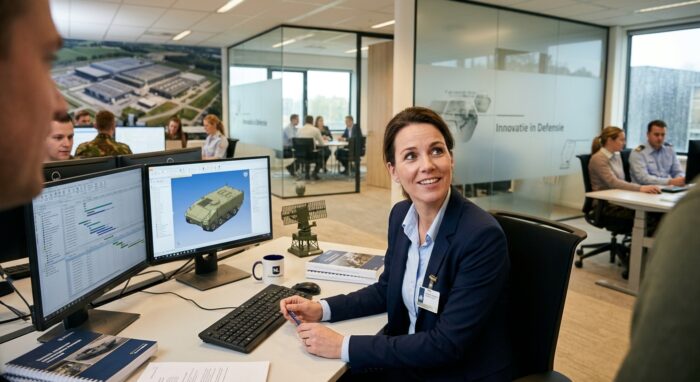
How do you make the defense sector attractive to professionals?
The Dutch defense and security sector is growing. As of September 1, 2026, approximately 86,000 military personnel, civilian employees and […]

Social impact, technical challenge, security and a unique working environment
Working in the defense and security industry is more interesting for many people than they might initially think. Not only for military personnel, but also for technicians, engineers and logistics specialists. The sector is growing, its social relevance is high and the need for skilled professionals is increasing. In this blog, you will read why working in the defense and security sector is attractive and what this means for employers and candidates.
When people think of defense, they often immediately think of soldiers, deployments and operational duties. That image is only party accurate. Behind the visible armed forces, there are many technical, logistics, medical, administrative and digital roles.
According to UWV, an estimated 8 out of 10 vacancies in defense are not combat roles, but supporting roles in a specific area of expertise, such as technology, IT or logistics. This makes the defense and security sector interesting for people who want to contribute to safety and security, but do not necessarily want an operational military role.
For Talentmark Defense, this is exactly where the bridge lies. These is a lot of talent in civilian society that, with the right guidance, explanation and understanding of the role, can be a strong fit within defense or the broader security sector.
An important reason to choose the defense and security sector is social commitment. The work contributes to the safety, stability and protection of the Netherlands and its allies. This makes roles within this sector different from many other jobs.
The social relevance is becoming increasingly visible. The Dutch government states that the Netherlands is investing in defense equipment, housing, technology and personnel in order to respond more quickly to threats. By 2030, 100,000 people should be working at the Ministry of Defense. In the years after that, this should grow to 200,000 people.
This means that defense is not only growing as an organization, but is also becoming an increasingly important part of the wider labor market. For candidates, this can be attractive because their work directly contributes to a bigger purpose. For employers, it means that the message towards candidates must clear. It is not only about the job profile, but also about the why behind the work.
The defense and security sector offers a great deal of technical challenge. Modern security requires systems, maintenance, data, communication, logistics, cyber, engineering and project management. This means there is a need for people who can think technically and understand complex systems.
The Dutch government states that, in the recruitment of more defense personnel, extra attention is being paid to roles where there are shortages. Technical and logistics personnel are explicitly mentioned in this context.
UWV also sees that the labor market for these professionals is tight. For 45 of the 59 occupations in which defense in actively seeking employees within technology and logistics, the labor market is very tight. This makes attracting talent challenging, but it also shows how many opportunities there are for professionals with a technical or operational background.
For candidates, this means that experience from other sectors can be valuable. Think of production, maintenance, engineering, logistics, the process industry, machine building or technical project environments. For employers, it means they need to look beyond candidates with previous defense experience.
In addition to social impact and technical content, security plays an important role. Especially in a labor market where a lot is changing, candidates are looking for stability, clear employment conditions and a reliable employer.
Randstad’s Workmonitor 2025 shows that, globally, work-life balance is considered more important than salary for the first time. At the same time, job security remains one of the most important factors for employees. Candidates look not only at what they earn, but also at stability, balance and the quality of the working environment.
Within the defense and security sector, security and clear conditions can therefore be a strong pull factor. Think of structure, development opportunities, training options, clear procedures and a working environment where the work matters.
That is why it is important for employers to be transparent about salary, contract type, working hours, location, safety requirements, the screening process and career development opportunities.
Working in the defence and security sector is not standard. The environment is often more complex, more sensitive and more socially relevant than in many commercial organisations. That makes the work unique, but it also requires clear explanation towards candidates.
For some candidates, that unique environment is exactly what sparks their interest. They want to work on systems, processes or projects that go beyond a regular commercial assignment. For others, defence raises questions. Do you need to be military personnel? Do you always work on a military base? Is there room for civilians? How does the security screening process work? And what does working for defence actually look like in practice?
These questions matter. Employers that want to attract new talent for the defense and security sector need to lower the threshold. That starts with clear communication. Explain what the role involves, what the working environment looks like and what contribution someone will make. Especially for people outside the sector, this can make the difference between dropping out and applying.
This sector needs talent, but at the same time, it is competing for the same people as industry, technology and logistics. That makes labour market communication and recruitment more important than ever.
For employers, this means that vacancies and recruitment campaigns need to be specific about:
Especially for candidates without a defence background, explanation is essential. A candidate may be a strong fit in terms of knowledge and experience, but still decide not to apply because the sector feels unfamiliar. Good recruitment is therefore not only about selection, but also about informing, guiding and managing expectations properly.
Talentmark Defense helps build the bridge between civilian society and the defence and security sector. We look at candidates’ knowledge, experience and motivation and translate that into roles where they can add value. We help find the right people who want to take a fitting step into a meaningful environment.
Read more about us here.
The Dutch defense and security sector is growing. As of September 1, 2026, approximately 86,000 military personnel, civilian employees and […]
The Ministry of Defense and organizations within the defense industry need technical professionals. However, suitable candidates are not always easy […]
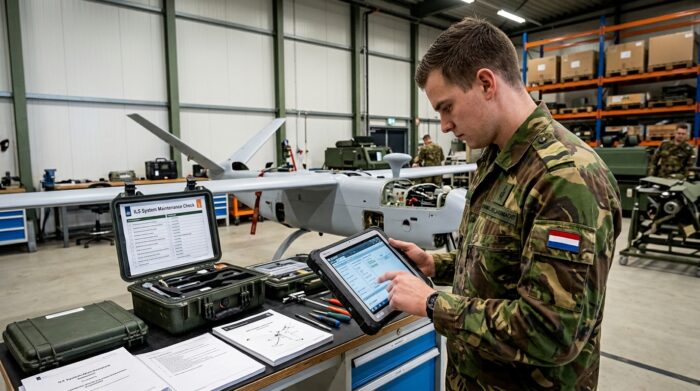
ILS within the defense and security sector is playing an increasingly important role. Defense works with complex systems, vehicles, installations […]