
 English
 Dutch
Dutch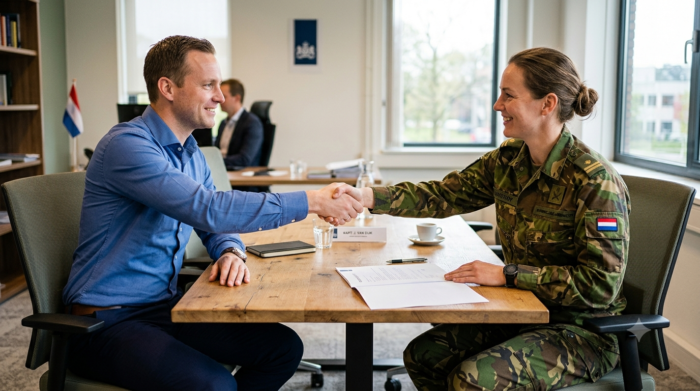
What are the benefits of using a specialist recruitment agency for defense?
The Ministry of Defense and organizations within the defense industry need technical professionals. However, suitable candidates are not always easy […]
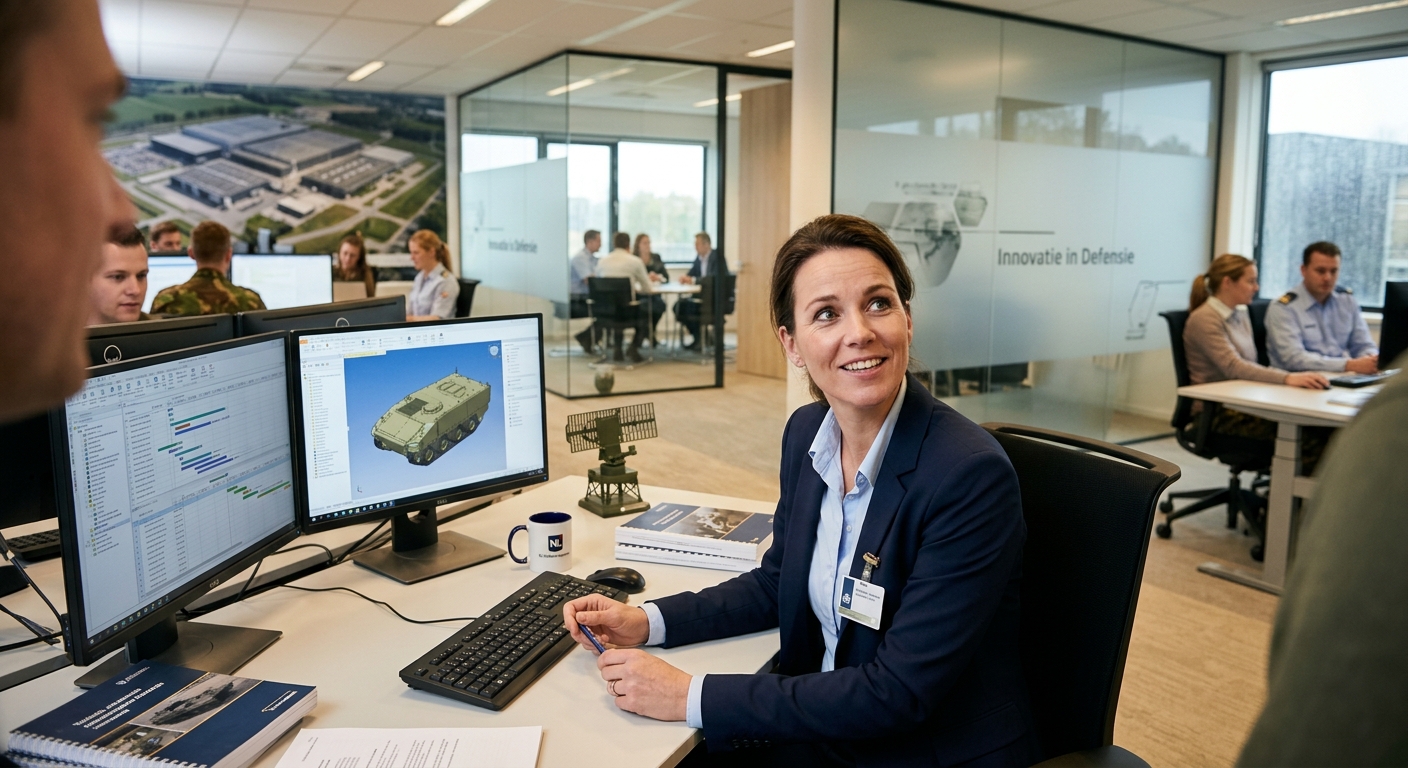
How to attract talent for defense
The Dutch defense and security sector is growing. As of September 1, 2026, approximately 86,000 military personnel, civilian employees and reservists work for the Dutch Ministry of Defense. By 2030, this number is expected to grow to around 102,000 people. The industry surrounding defense is also expanding. More than 35,000 professionals in the Netherlands are now directly involved in defense-related activities. Enabling this growth requires investment, technology and production capacity, but above all, the right professionals. As a result, demand for technical talent is increasing further. At the same time, these specialists are already scarce. The defense sector will therefore also need to attract professionals who currently work in other technical industries. How can you, as an employer, encourage them to consciously choose your organization and the defense sector? In this blog, we look at what research tells us and which steps employers can take to become more attractive to technical talent.
The potential among people interested in working in the defense and security sector may be greater than expected. In April 2026, the European Commission published the Study on the Attractiveness of the Defense Industry. More than 2,600 students and young professionals, as well as over 700 current and former employees in the defense sector, were surveyed for the study. One notable finding was that 58% of respondents considered a career in defense attractive, while only 6% of job seekers actually intended to actively look for a job in the sector. There is therefore a significant gap between being interested in the sector and actually applying for a job.
How familiar someone is with the sector appears to play an important role. Among respondents who were familiar with the defense industry, 79% considered the sector attractive and 64% would consider a career in defense. Among people who were less familiar with the sector, these figures were considerably lower, at 46% and 28% respectively. In this study, greater familiarity with the sector is therefore clearly associated with greater attractiveness as an employer. The study identifies limited knowledge of available roles, unclear entry routes and a lack of transparency around recruitment processes as some of the barriers.
This creates a clear opportunity for employers. Do not only make the vacancy easy to understand, but also make the defense sector itself more understandable. Show what technologies your organization works on, how a specific technical role contributes to them and which knowledge and experience from industries such as high-tech, automotive, aerospace, mechanical engineering or other industrial environments is relevant. For someone who has never worked in defense before, that connection is not always obvious. Simply explaining what someone will do is not enough. Employers also need to show why a professional should choose their organization and the defense sector in particular.
Visibility becomes even more important because the defense sector partly depends on professionals who currently work in other industries. Research by Berenschot identifies the labor market as a structural barrier to further growth, with technical, digital and engineering talent in particularly short supply. And that is understandable. The professionals needed by the defense sector often have many opportunities elsewhere as well. UWV also recognizes this competition for talent. Of the 59 occupations for which Defense is recruiting across areas including technology, ICT, transport, logistics and healthcare, the Dutch labor market is considered very tight for 45. Technical specialists and mechanics are among the profiles that are particularly difficult to find.
When it comes to societal relevance and technology, the defense sector has a distinctive story to tell. Working on security, technological independence and the protection of critical infrastructure gives professionals the opportunity to apply their technical knowledge to a clear societal purpose. However, terms such as impact, security and innovation can quickly remain abstract. That is why it is important to clearly explain what a professional contributes in practice.
A technical specialist, for example, may work on testing and maintaining complex sensor systems or unmanned systems. Their role is not simply to make sure a technical system functions, but to ensure that equipment remains reliable and operational when it is needed most.
At the same time, it is important not to avoid the questions candidates may have about the sector. A 2026 study shows that ethical considerations can be a barrier for some potential employees. Respondents also expressed certain perceptions about hierarchy and the level of flexibility within the sector. A strong employer brand does not simply try to dismiss those perceptions, but gives candidates an honest picture. What exactly does your organization do? Which projects are you working on? What is the company culture like? How much responsibility and autonomy does someone have within their role? Which development opportunities are available? And which forms of flexibility are or are not possible within the work? That story does not always have to come from HR or from a vacancy text.
Research shows that authenticity is at least as important to potential employees as financial benefits and opportunities for personal development. As a practical application, researchers highlight employee testimonials, blogs and social media as ways for employees themselves to show what it is like to work within an organization. For example, let an employee explain why they moved from another industry into the defense sector. This gives potential candidates a much more concrete and credible impression of your organization.
Making the defense sector attractive to professionals ultimately requires more than a good vacancy text or a one-off employer branding campaign. Especially when recruiting scarce talent, recruitment starts before a specific vacancy becomes available.
For individual employers, this translates into a number of practical choices:
That final point is becoming increasingly important. Employers that only start searching when a technical vacancy becomes available are immediately competing with every other organization looking for the same professional. Employers that communicate earlier about what they do, why the work matters and which career opportunities they offer can start building interest and trust much sooner.
The defense and security sector is growing, but this growth is only possible when organizations have access to the technical knowledge and capacity needed to turn their ambitions into reality. Talentmark Defense therefore does more than help organizations find professionals for an open vacancy. We want to understand your organization, technical environment, projects and future workforce needs. This allows us to look beyond the traditional defense labor market and identify technical professionals with relevant knowledge and experience from other industries. In this way, we build sustainable connections between technical professionals and organizations within the Dutch defense and security sector. Would you like to know how Talentmark Defense can help you reach and attract technical talent? Contact us.
The Ministry of Defense and organizations within the defense industry need technical professionals. However, suitable candidates are not always easy […]
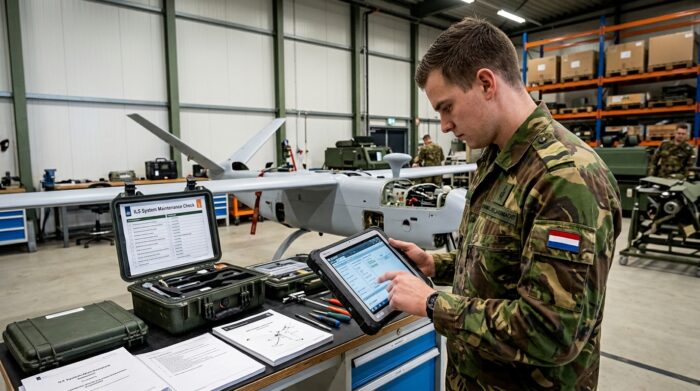
ILS within the defense and security sector is playing an increasingly important role. Defense works with complex systems, vehicles, installations […]

Working in the defense and security industry is more interesting for many people than they might initially think. Not only […]