
 English
 Dutch
Dutch
How do you make the defense sector attractive to professionals?
The Dutch defense and security sector is growing. As of September 1, 2026, approximately 86,000 military personnel, civilian employees and […]
Why this role is becoming increasingly important
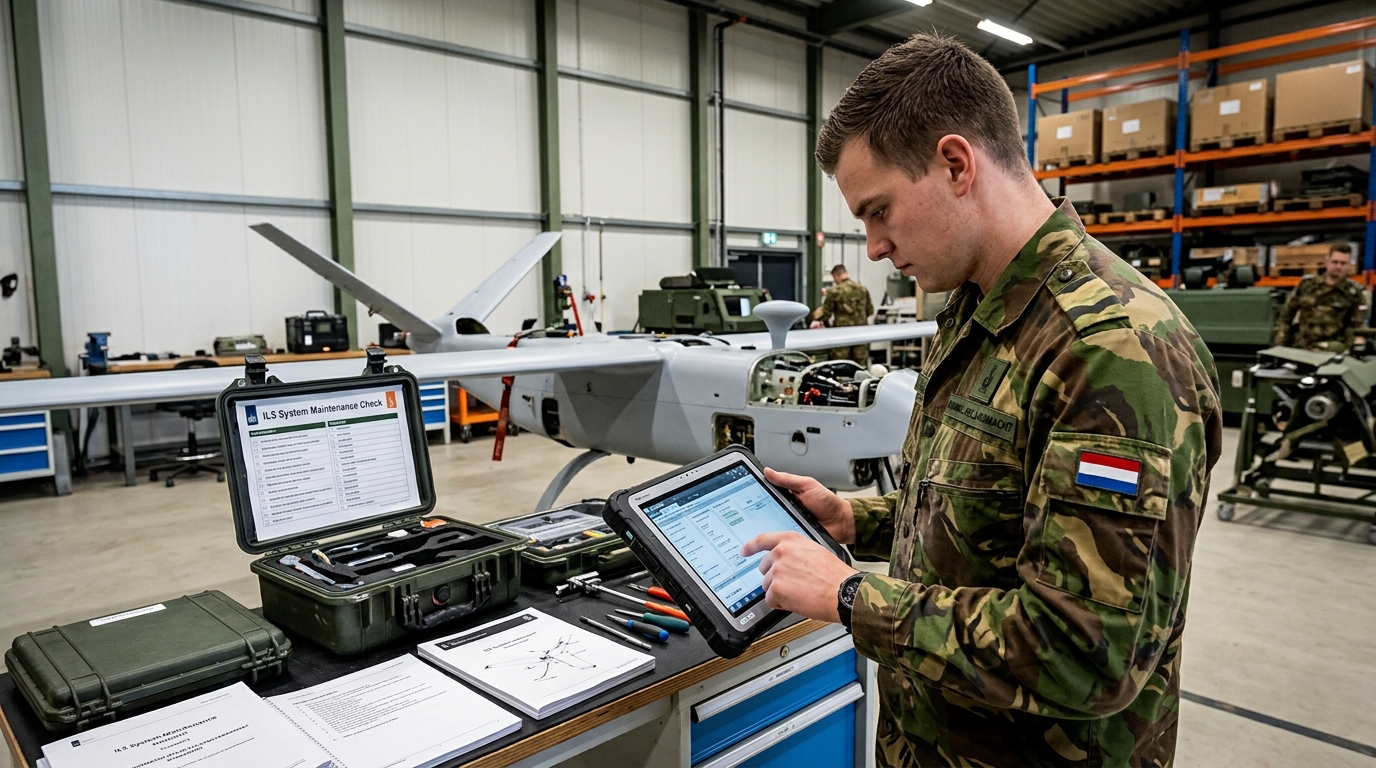
ILS within the defense and security sector is playing an increasingly important role. Defense works with complex systems, vehicles, installations and equipment that must remain safe, reliable and operational. This requires professionals who connect technology, maintenance, logistics and documentation. In this blog, you will read why ILS is important, what you do in an ILS role and which experience aligns well with this type of position.
Defense is growing and technology is becoming increasingly important. Think of weapon systems, communication systems, drones, sensors and other technical equipment. These systems do not only need to be developed or purchased. They also need to remain operational for many years.
That is where ILS comes in. ILS stands for Integrated Logistics Support and focuses on everything needed to use, maintain and support equipment throughout its full lifecycle. Within defense, this is crucial because availability and reliability directly affect operational deployment. The more complex systems become, the greater the need for professionals who think ahead. What maintenance is required? Which spare parts need to be available? What documentation is needed? How do you make sure mechanics, users and technical teams can work with the right information?
ILS professionals ensure that technical systems do not only work well on paper, but also remain operational in practice.
In an ILS role, you work at the intersection of technology, logistics, maintenance and documentation. You look at the full lifecycle of systems and equipment. From commissioning to maintenance, support, improvement and sometimes replacement. Responsibilities may include:
ILS is more than documentation alone. You contribute to answering the question of what is needed to keep a system functioning reliably, also in the long term.
For an ILS role within the defense and security sector, you do not always need previous experience in this sector. Experience from industry, technology, engineering, maintenance, automotive, high-tech, aerospace or logistics can be a strong match. You may be a good fit for an ILS role if you have experience with maintenance planning, technical documentation, supply chain, project-based work or analyzing technical systems.
In addition to technical knowledge, structure, accuracy and communication are also important. You often work with different stakeholders, and you need to be able to understand technical information and translate it into practical support.
Within Defense, a lot revolves around operational readiness. Equipment must be available when it is needed. Not only during regular activities, but especially under pressure, during exercises, missions or unexpected circumstances. That is why ILS is crucial. A good system has limited value if parts are missing, maintenance information is incorrect or users do not know how to work with it. ILS helps prevent this. Strong ILS contributes to:
For Defense and its suppliers, ILS is therefore becoming increasingly important. Especially now that systems are becoming more complex and the demand for technical support is growing.
Do you have a technical background and do you want to work on systems that matter? Then ILS within Defense could be an interesting next step. You remain technically involved, but you look beyond one component or one project. You work on the operational readiness of systems that contribute to safety, protection and operational capability.
At Talentmark Defense, we help connect professionals with Defense and its suppliers. We look at your experience, your ambitions and which role is the right match.
Curious whether your experience aligns with an ILS role? Get in touch with us. We are happy to think along with you. You can also find an overview of all our current ILS vacancies here.
The Dutch defense and security sector is growing. As of September 1, 2026, approximately 86,000 military personnel, civilian employees and […]
The Ministry of Defense and organizations within the defense industry need technical professionals. However, suitable candidates are not always easy […]
Working in the defense and security industry is more interesting for many people than they might initially think. Not only […]