
 English
 Dutch
Dutch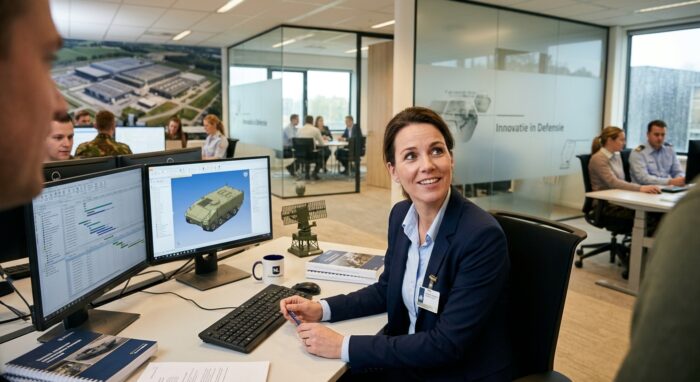
How do you make the defense sector attractive to professionals?
The Dutch defense and security sector is growing. As of September 1, 2026, approximately 86,000 military personnel, civilian employees and […]

An interview with Arne Dekkers
The defense and security sector faces a structural challenge: attracting enough qualified employees who can operate within a complex environment. In addition to military personnel and reservists, civilians play a crucial role. They provide continuity, specialist knowledge and stability.
Although defense is often seen as a world entirely of its own, many roles are substantively comparable to positions in other vital sectors.
The function that need to be filled within defense are, in principle, the same as those in other sectors.
The difference lies not in the profession itself, but in its application. Some roles within defense are specifically designed around weapons systems, vehicles or defense equipment, but the core remains recognizable. Or as Arne puts it:
A good technician within a production or vehicle site could fit perfectly within defense. The foundation is the same, but working with defense specific equipment is something you learn on site. That’s the added specialism.
What distinguishes working for defense from many other sectors is the combination of substantive responsibility and societal significance. Civilian employees are not only responsible for their own tasks, but also for the reliability and continuity of systems and projects that directly affect the security of the Netherlands.
These are responsible roles where everything must be 100% right
Alongside responsibility, motivation plays an equally important role. Working for defense requires a conscious choice for the societal interest. Civilian employees from a structural pillar within the organization. When there is real operational need, civilian staff ensure continuity at bases, barracks and within the home country.
Across all roles, civilian employees are the most stable factor within the organization. When military personnel are deployed, civilians ensure that projects on location continue to run.
Recruitment and selection within defense require a careful approach. Every process starts with an in-depth conversation with the hiring manager of the organization in question, addressing questions such as ‘What type of employee do you need?’ or ‘Which experience is required?’. After this discussion, an initial selection of candidates follows. They must be eligible for a Certificate of Conduct (VOG) and often also for a Security Clearance (VGB), as Arne explains:
More in-depth questions are asked during the initial introduction, because you need to meet a number of specific requirements set by defense from the outset. These are often just a bit more demanding than in a regular ‘civilian’ role
According to Arne, this requires a high level of reliability and diligence from both candidates and the recruitment process itself. It also helps prevent mismatches and disappointments later in the process.
Working for defense is a substantive choice in which you opt for a specific environment, context and level of responsibility. Civilians within defense work on projects and systems that directly contribute to the safety and resilience of the Netherlands. This requires technical expertise, commitment and conviction.
You must want to work for an organization that safeguards the security of your country and be willing to be part of a truly unique field of work.
It is precisely this unique character that means working for defense is not for everyone. But for employees who recognize themselves in this responsibility and motivation, the defense and security sector offers an environment where substance, meaning and stability come together.
Talentmark Defense supports people who are considering a move into a role within defense. Not only by looking at experience and CVs, but above all by assessing whether someone fits within the context of defense. With experience in sectors where strict procedures, quality and safety are paramount, Talentmark understands what organizations in the defense and security industry require and how professionals can be guided towards these roles.
Do you work in technology, engineering, IT or another discipline and wonder whether working for defense could suit you? Arne is happy to help you gain insight into this step. Together, we explore whether your knowledge and experience can contribute to the security of the Netherlands. Get in touch!
The Dutch defense and security sector is growing. As of September 1, 2026, approximately 86,000 military personnel, civilian employees and […]
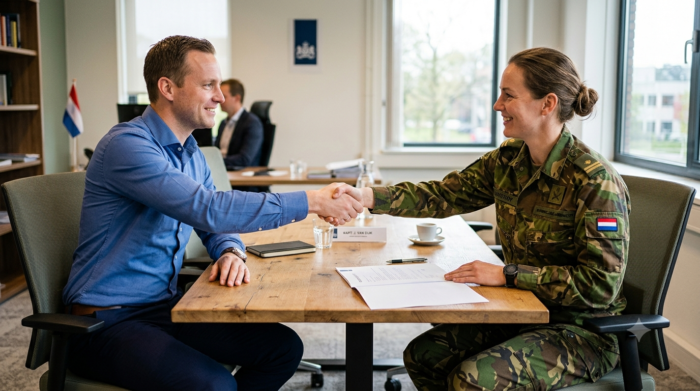
The Ministry of Defense and organizations within the defense industry need technical professionals. However, suitable candidates are not always easy […]
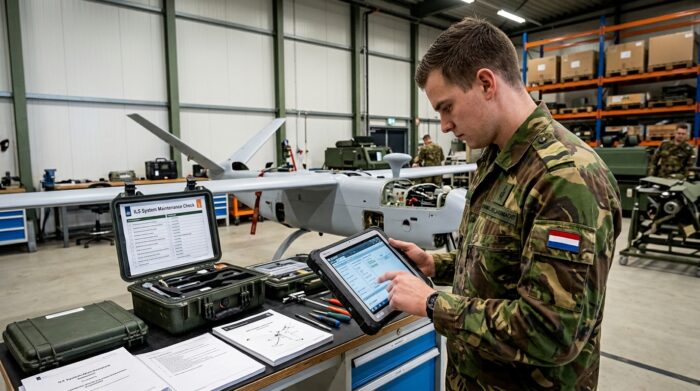
ILS within the defense and security sector is playing an increasingly important role. Defense works with complex systems, vehicles, installations […]